

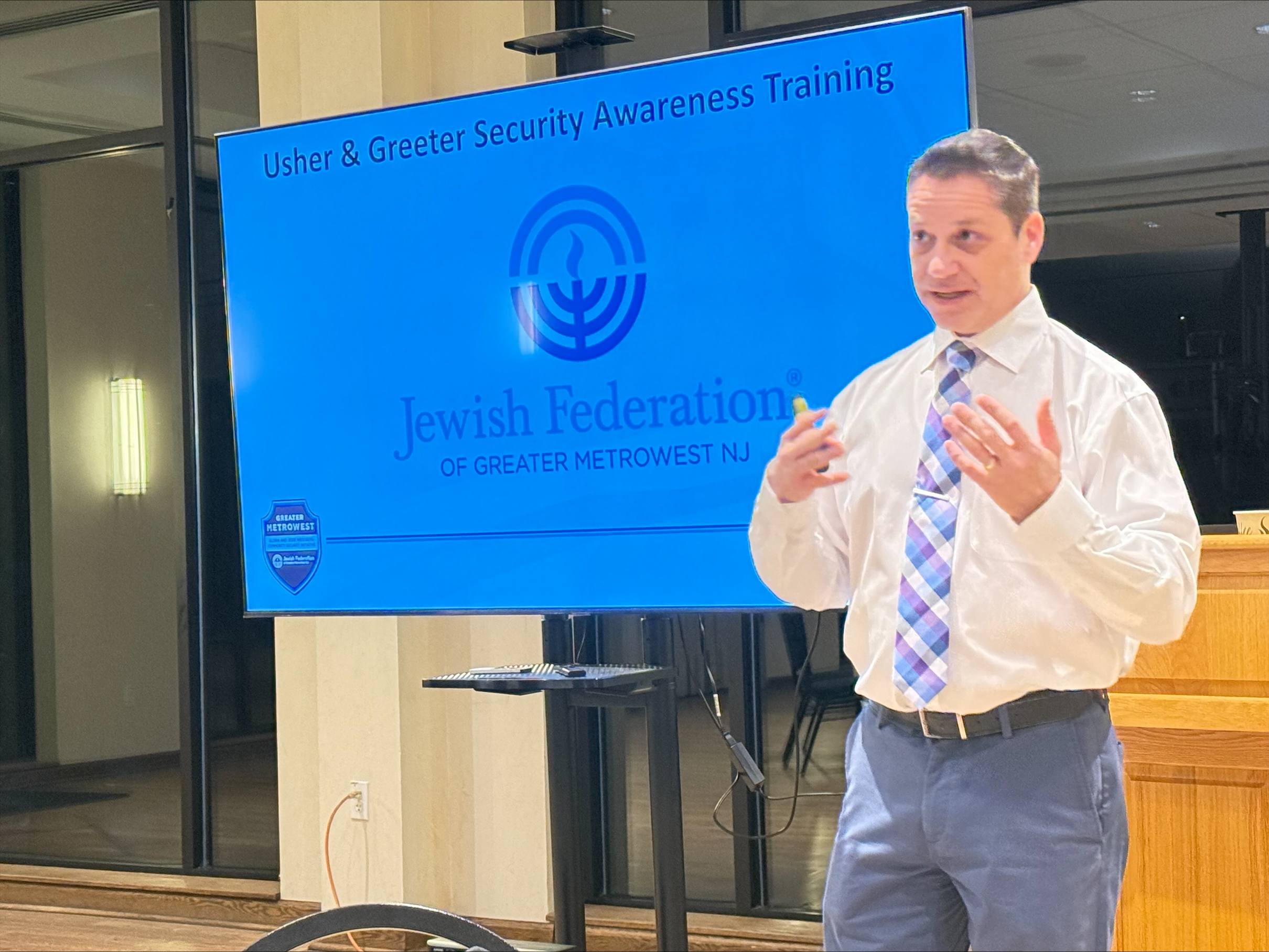
As the Director of Community Security Training at Jewish Federation of Greater of MetroWest NJ, I’ve had the privilege of leading initiatives that not only enhance the safety of our synagogues, early childhood centers, and day schools, but also empower congregants and staff with the knowledge and tools they need to protect their community. Since joining Federation just under two years ago, I’ve had the incredible opportunity to train over 3,400 people across 150 sessions, each of which has been a step toward fostering a more secure and resilient environment.
One of the most exciting aspects of my role has been helping to expand our Security Pathway—a strategic initiative designed to structure and streamline our training programs, providing a clear, step-by-step approach to security preparedness. This pathway was created to ensure that security training is both effective and accessible to everyone involved in our community—whether you’re a security team member, clergy, or a congregant who wants to better understand how they can contribute to the safety of their synagogue.
Our goal with the training part of the Security Pathway is simple but crucial: to provide comprehensive training courses that enable our community to be safer and more secure in an ever-changing world. To achieve this, we have designed a series of specialized seminars and training courses.
Learn how to make your community safer with these key security offerings:
Active Threat: “Run. Hide. Fight.” Training
This session equips individuals with essential strategies for responding to an active shooter or violent threat. Participants learn how to prioritize escape (Run), find secure shelter (Hide), and, as a last resort, defend themselves (Fight). The training focuses on real-world safety techniques to enhance preparedness in critical situations.
The “Power of Hello” Situational Awareness Training for Ushers and Greeters
This course helps ushers and greeters identify potential threats while maintaining a warm and welcoming environment. Participants learn to read body language, remain attentive, and use simple interactions to foster safety and awareness without creating fear or discomfort.
De-Escalation Training
This training teaches individuals how to handle tense or confrontational situations with calm and confidence. Through proven communication techniques, participants learn to defuse conflicts, reduce aggression, and prevent violence using active listening, composure, and respectful dialogue.
CPR/AED and Stop the Bleed Trainings
These vital, life-saving courses prepare individuals to respond effectively to medical emergencies. Participants in these trainings learn CPR techniques, how to use an automated external defibrillator (AED), and critical bleeding control methods such as direct pressure and tourniquets—skills that can save lives before emergency responders arrive.
Lockdown Training for ECCs and Congregational Schools
Designed for educators and school staff, this training provides step-by-step guidance on securing classrooms, protecting children, and maintaining order during a threat. It covers lockdown procedures, emergency communication, and strategies for creating a safe learning environment under high-stress conditions.
Tabletop Exercises for Executives, Lay Leaders, and Educators
These facilitated, scenario-based simulations help synagogue leaders, educators, and executives practice their responses to various crisis situations. By working through real-world emergency scenarios, participants refine decision-making skills and improve coordination in high-pressure environments.
Additional Specialized Courses
Internet Fraud Prevention for Teens and Adults/Seniors
This course empowers participants to recognize and protect themselves against online scams, identity theft, and cyber fraud. With tailored content for different age groups, it provides practical tools to navigate the digital world safely.
Suspicious Package and Mail Handling
Participants learn to identify, report, and manage potentially hazardous packages or mail. This training enhances community awareness and preparedness, ensuring a swift and effective response to potential threats.
Safe Traveling (Domestic and International)
A must-have for frequent travelers, this course covers best practices for staying safe while on the move. Topics include securing personal belongings, handling emergencies, and navigating unfamiliar environments both at home and abroad.
Camp Safety
This training equips camp leadership, staff, and counselors with the skills needed to maintain a safe and secure environment for children. Topics include health and safety protocols, emergency procedures, and risk management strategies to ensure the well-being of campers.
Through our Security Pathway, we’ve been able to streamline our approach to training, ensuring that each step builds on the last, creating a clear roadmap toward a safer community. We are incredibly proud of the progress we’ve made in these past two years, and the number of people who have embraced these trainings speaks volumes about the commitment to safety in our community.
Ultimately, the work we do goes beyond just physical safety; it’s about fostering a culture of awareness and preparedness. By making these training courses accessible to all levels of involvement, from volunteers to leadership, we can ensure that our synagogues, early childhood centers and Jewish day schools are secure environments, where people feel safe and supported.
As we continue to refine and expand our range of offerings, I look forward to seeing even more people empowered to take an active role in securing their community. There’s always more to be done, but we’re on the right path, and together, we will continue to create safer spaces for all.
If your synagogue would like to host or participate in a security training, please reach out to me at [email protected] or give me a call at (973)929-3168.