

Jewish Federation of Greater MetroWest NJ’s Mission to Poland to participate in the annual March of the Living from Auschwitz to Birkenau was both devastatingly sad and also redemptive in some respects.
Life in the Warsaw Ghetto presented this paradox.
When the Nazis sealed the ghetto in November 1940, nearly 30% of the population of Warsaw was confined to just 2.4% of the city’s area. Jews were allotted only 181 calories a day. Disease, starvation, and despair were everywhere.
But so too was humanity.
We learned that even in such desperate conditions, Jews found ways to maintain dignity through secret schools, underground newspapers, music, art, and prayer. Most moving to me was how we cared for one another. We built soup kitchens and dispensaries. We comforted the sick. We found ways, however small, to bring compassion into an unimaginably cruel world. In the darkest places, our community created light.
As the child of two Holocaust refugees, these stories feel heartbreakingly familiar. In my family, the decade from 1936 to 1946 is spoken of in fragments—loss, flight, sorrow, and, somehow, survival. My few surviving relatives were scattered to distant corners of the world—America, England, Argentina, Israel. And yet, what has always struck me is how tightly we’ve held onto one another, even across oceans.
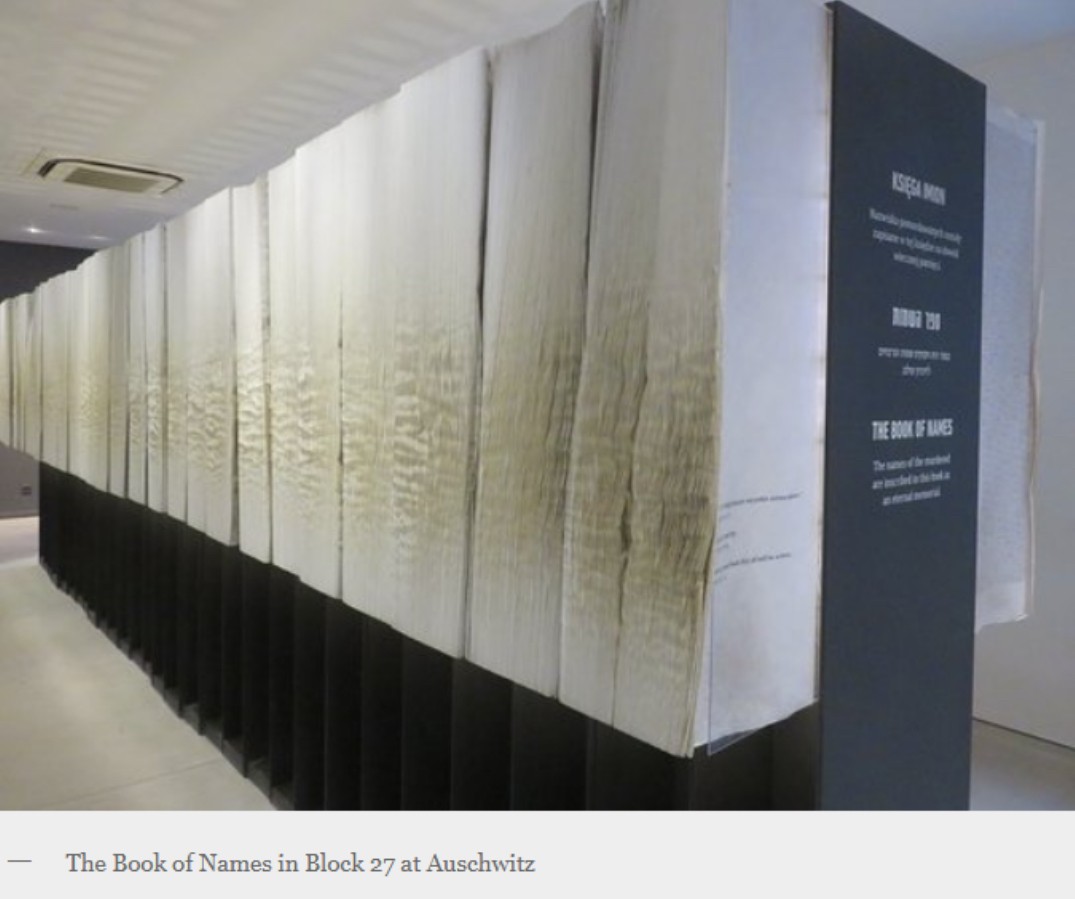
Another powerful moment during our journey was the Book of Names. The book’s pages are massive, laminated sheets nearly a yard tall and a foot wide, bound into 70 volumes that stretch nearly nine yards across a black stand, lit softly from below. Each page contains thousands of names. In total: 4.8 million documented Jewish victims of the Holocaust. Each name a life. A story. A family.
Today, the Jewish people, a tiny fraction of the world’s population, are dispersed around the world, but I can proudly say that I have seen evidence of how we care for one another as if we were all still living next-door to each other in the same shtetl.