

When we first started dreaming up “Israel Through the Six Senses,” it wasn’t just about programming. It was about healing. It was about finding a way to feel Israel again—beyond the headlines and heartbreaking updates, through the things that connect us most deeply: flavor, music, beauty, memory, and story.
After October 7, something shifted in the way many people in our community related to Israel. Some felt more connected than ever. Others felt overwhelmed, distanced, or unsure how to engage. What was clear to me as a shlicha (emissary) was that we needed a new approach, one that didn’t ignore the pain but also reminded people of Israel’s soul.
That’s how Israel Through the Six Senses came to life.
Each event in the series was built around one of the traditional senses; taste, touch, smell, sight, and sound, with a sixth “sense” at the heart of it all: the personal Israeli story of the shaliach.
We began with the sixth sense—warm, intimate, and deeply personal: my own Israeli story. In an intimate gathering, I shared a piece of my journey alongside a taste of a traditional Yemeni dish: Kubaneh, the slow-cooked bread my family prepares for Shabbat mornings. It was a moment of quiet listening, homemade flavors, and heartfelt connection.
Next came our Mimouna celebration, marking the end of Passover. We dove into this North African-Jewish tradition with sweetness and curiosity. Guests tasted mufletas, explored the cultural roots of the holiday, heard personal stories, and felt the warmth and generosity that define Mimouna in Israeli homes. The energy that night was unforgettable, joyful, welcoming, and full of pride. As Laurence Seltzer, one of the committee members beautifully put it: “Seeing the community so open to celebrate and learn about traditions I grew up with really warmed my heart. There was so much positive energy, togetherness, and sweetness in the room, and not just from the delicious desserts.” And perhaps most meaningfully, it reminded people that Jewish community is broader, deeper, and more diverse than what we sometimes see.
For the sense of sound, I turned to a story that had personally moved me: that of Yuval Raphael, a survivor of the Nova festival massacre who went on to represent Israel in Eurovision. I shared a blog post about her courage, her voice, and how music became her lifeline after the trauma of October 7. Her song, “New Day Will Rise,” echoed what many of us were feeling—the longing for light, resilience, and hope.
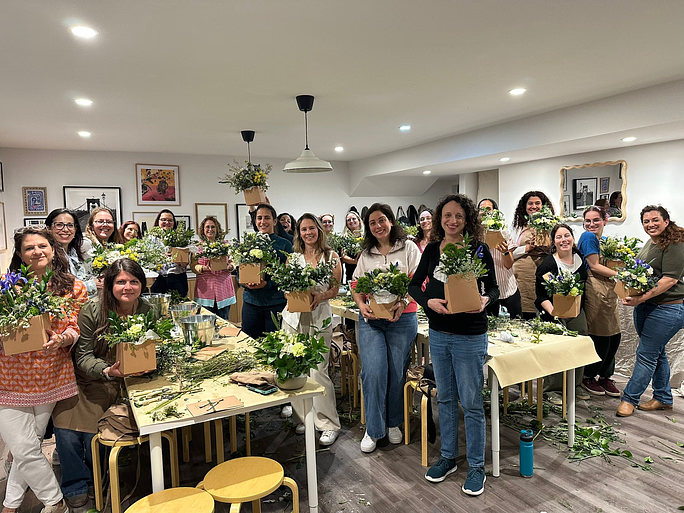
We ended the series by welcoming spring with a flower-arranging workshop for Shavuot, inspired by the Israeli custom of decorating with fresh blooms. It was tactile, colorful, and joyful. A celebration of life and renewal. While weaving flowers, we also wove stories of harvest, community, and the deep bond between people and land in Israeli culture.
At each gathering, something beautiful happened. We paused. We touched. We tasted. We created. We listened to spices and memories, to songs and silence, to questions and stories that made Israel feel close again. And in those moments, we connected—not just to Israel, but to one another.
The biggest takeaway from this series?
People are craving connection. Not just to information, but to meaning. Not just to Israel’s past, but to its pulse. We saw it in every conversation after the events. In the spark that came back to people’s eyes when they realized: Yes. This is the Israel I know and love.
It wasn’t about escaping the hard things. It was about balancing them with beauty, with life, with depth. And, most importantly, with hope.