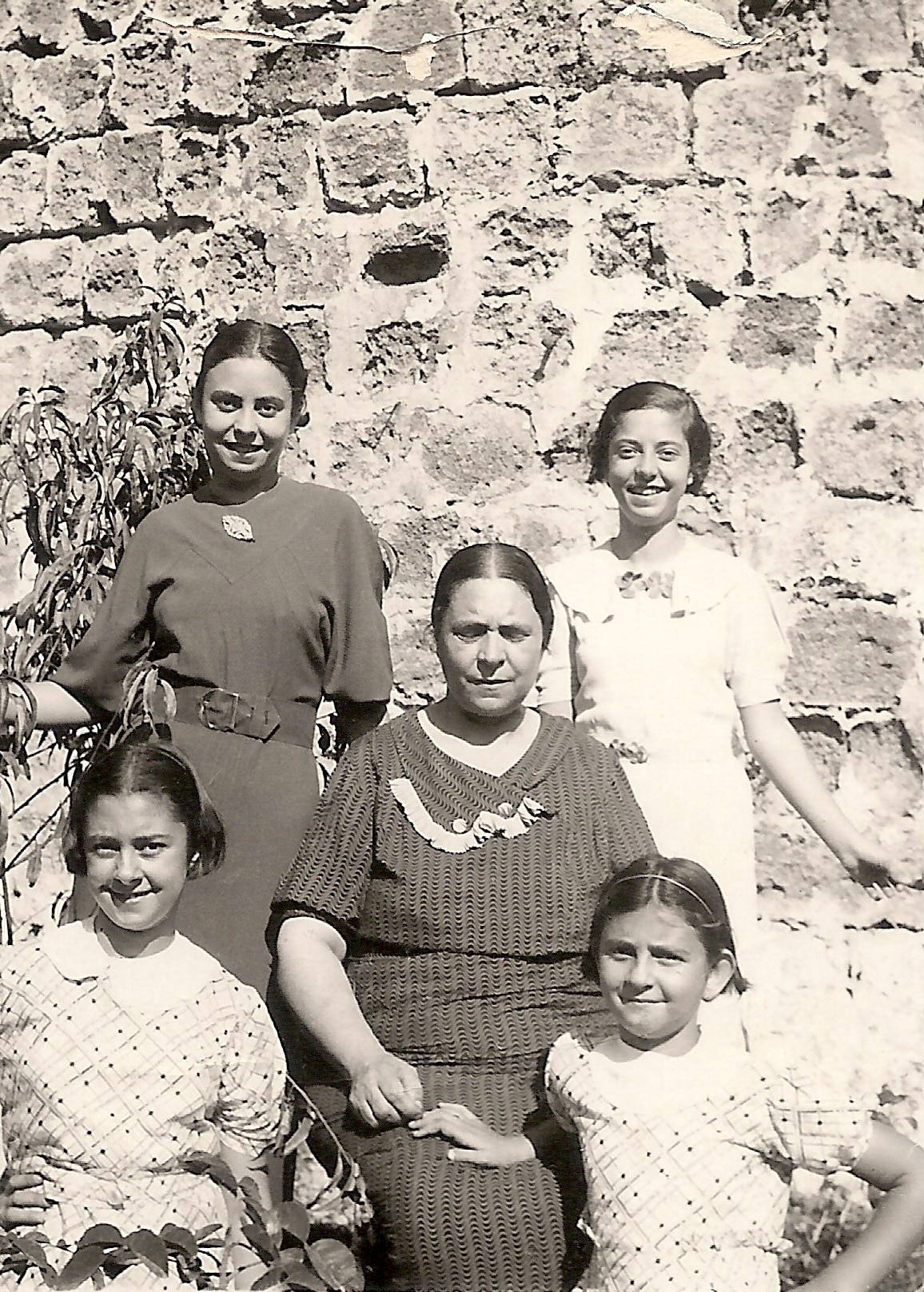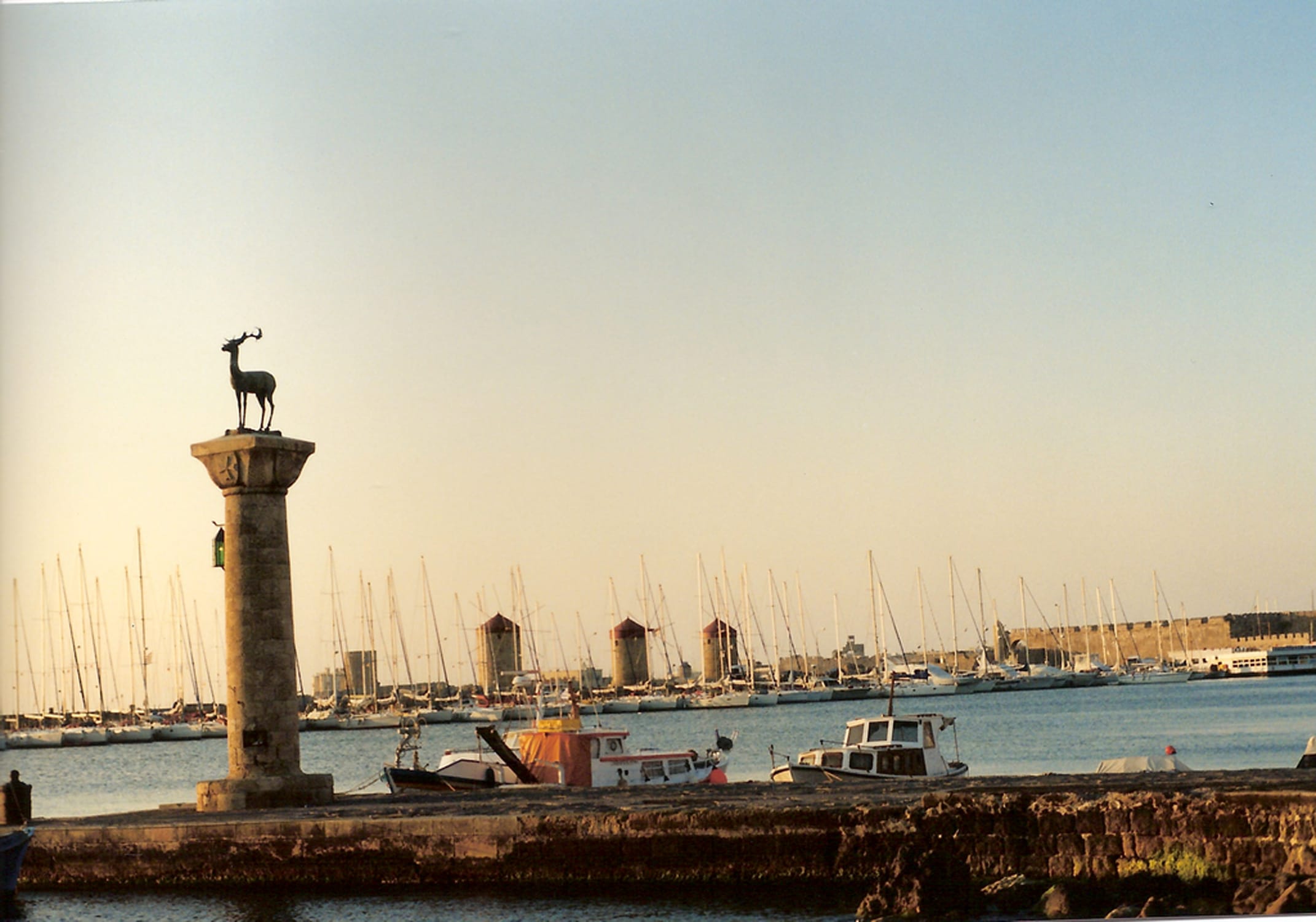

On Sunday, July 23, 1944, the German military command in Rhodes set off air-raid sirens to keep the residents of the island indoors. There were no Allied bombers overhead early that morning, nor were the sirens a response to an aerial attack. Rather, they were a tactic of deception to conceal the operation that was about to unfold. Remaining inside their homes with curtains drawn, the Greek, Italian, and Turkish residents of the island were not privy to the spectacle of the Jews walking through the empty streets of the town from the former Italian aeronautics building to the Mandraki harbor. There, three dilapidated barges were waiting to take this centuries-old Sephardi community on the first step of their final journey to Auschwitz-Birkenau. Of approximately 1,800 people deported from Rhodes and the nearby island of Kos, 152 survived. My mother was one of them.
It was the longest voyage to Auschwitz of any Jewish community in Europe, and the farthest away. They arrived at Auschwitz-Birkenau on August 16, having endured a 25-day journey–a sea voyage to Piraeus under the hot July Mediterranean sun, imprisonment in Haidari concentration camp outside of Athens, and the journey from Athens by cattle car.
Like many Jewish communities across Europe, the once-flourishing Judeo-Spanish community of Rhodes could not be rebuilt after the war.
I knew the facts. I knew that virtually every person in the émigré Rhodesli communities of Rhodesia (Zimbabwe) and the Belgian Congo (Democratic Republic of Congo) had suffered a fate like that of my family and had experienced similar losses. Yet, I had shielded myself from the magnitude of the tragedy by focusing on those who survived.
After all, I had grown up in the Ladino-speaking Sephardi community of Zimbabwe, where I heard stories of happy childhoods, close-knit families, and the richness of life in the Juderia, the Jewish quarter of Rhodes. “Only God could have given us such a beautiful island,” is a refrain passed down from one generation of Rhodeslis to another, reflecting the profound emotional attachment the Jews of Rhodes felt for the island of their birth, an attachment they transmitted to us, their children. That island of memory has always been a core part of my identity, as has the Shoah. Perhaps the sense of continuity between their earlier lives in Rhodes and their lives after moving to Africa afforded me protection from confronting the enormity of all that had been destroyed and lost.
I never wanted to go to Auschwitz. I thought it would be too painful. But when I accompanied my husband, Michael, to the orientation meeting for the Jewish Federation of Greater MetroWest NJ Poland mission in September, I realized how important it was to join him on this journey of discovery of his father’s past. I also began to understand that I, too, needed to make such a journey for myself.
At Auschwitz-Birkenau, I couldn’t help but think of my grandparents, Nona Rachel and Papu Meir and Nona Rosina and Papu Mouchon, my aunts, Tia Rebecca, Zia Sara, Zia Flora, and Tia Giulia, and my uncles, Tio Michel and Tio Samuel. I remembered my parents’ friends, and the survivors I have known. I imagined them all stepping off the trains after their long, harrowing journey from Rhodes, not knowing what awaited them. Their memory was with me throughout that day.
Above all, I thought of my mother. Being there was a way to honor her, but also to understand more deeply who she was and what she had endured. As I stood in Auschwitz-Birkenau, I felt closer to a part of her life that I could never fully know. It was an opportunity I had never expected to have–and one whose importance I had underestimated.
Throughout our journey, Betsalel and Miriam, our Israeli educators and guides, masterfully helped us see not only the suffering, despair, and murder of European Jewry, but also the extraordinary richness of Jewish life before the war. They brought to life stories of resistance, courage, and resilience. Especially in Krakow, we encountered signs of Jewish renewal. That was something I had not fully anticipated and it gave me comfort and hope.
We are living at a time of rising antisemitism, racism, xenophobia, and Holocaust denial. With so few survivors remaining, the responsibility of remembrance falls increasingly on us all. In Poland, I asked myself with new urgency what it means to remember. How do we ensure that remembrance remains meaningful to future generations? How do we translate memory into values that guide us now?
There are no easy answers. I wonder, too, whether there is a growing fatigue in the world with Holocaust remembrance, and how to continue to keep its lessons alive.
What this journey gave me, unexpectedly, is another way of thinking about memory.
I have always carried a deep sense of loss, both for my family and for the vanished Sephardi world of Rhodes. But in Poland, alongside that legacy of loss, I discovered a legacy of renewal. I came to understand that remembering the destruction and recognizing the renewal of Jewish life are not mutually exclusive. Both are part of our story, and it is possible to hold both truths together at the same time. Perhaps that is what I will carry most deeply from my journey.
I travelled to Poland expecting to confront the destruction of a world I had inherited through memory. I returned with a deeper understanding of my mother’s experience and with renewed appreciation of the resilience of the Jewish people. Moreover, I take even greater pride in living as a Jew. I cannot separate the sorrow of what we lost from the gratitude that we survived. Both are part of who I am.
The journey to Poland has brought me closer to reconciling with my past. I have come home with a better understanding of my present as informed by our past, and perhaps with a little more peace in my heart.