

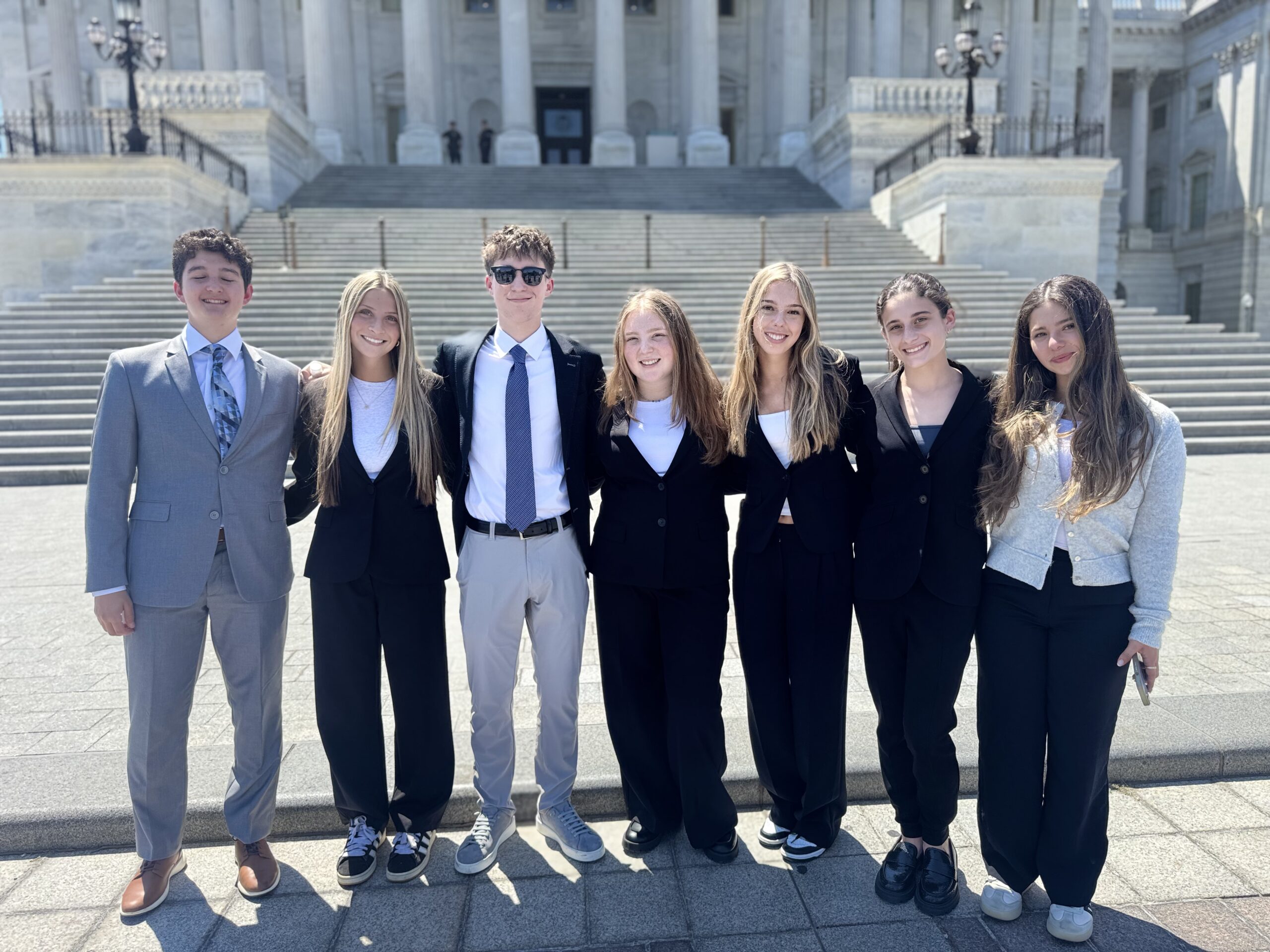
My alarm went off before 5 in the morning.
Most seventeen-year-olds would have rolled over. We got on the bus.
As part of the Teen Leadership Council (TILC), my peers and I spent our junior year learning what it means to advocate for causes bigger than ourselves. We studied policy, engaged with community leaders, and built the confidence to speak on issues that matter deeply to us. On June 4, 2026, we stood in the halls of Congress, where we met with Rep. Analilia Mejia, Congresswoman LaMonica McIver, Congressman Rob Menendez, Senator Cory Booker, and Senator Andy Kim.
We came prepared. We urged members to maintain the $3.3 billion in annual security assistance to Israel, the foundation of a strategic alliance decades in the making. We asked them to cosponsor the U.S.-Israel FUTURES Act, legislation that accelerates joint development of critical defense technologies, ensuring new capabilities reach American and Israeli service members more quickly. We also made the case for the Iran Human Rights, Internet Freedom, and Accountability Act, a bipartisan bill that expands secure internet access for Iranians living under a regime that has shut down communications for months at a time, holds corrupt officials accountable for stealing billions from their own citizens, and puts Congress on record standing with a people facing violence for demanding free elections.
I spoke about the Iran bill myself. The Iranian regime fears one thing above all else: a connected, informed population. That is why it restricts access to information and silences those who challenge it. America has always called itself a beacon of democracy. This bill is a chance to live up to that promise.
But nothing I said landed the way our personal stories did.
One friend described the night a Molotov cocktail was thrown at her temple. In the aftermath, a religious leader in her community stood by her congregation, offering comfort during an unimaginable moment. Then October 7th happened. That same person began posting antisemitic content online. The support she had counted on quietly disappeared, replaced by something she never expected.
Others, myself included, spoke about what antisemitism looks like in the hallways of a suburban New Jersey high school. The memes passed around in group chats like they were nothing. The Nazi symbols scratched into desks, scrawled on bathroom walls. The jokes that were not really jokes. Hatred that does not announce itself but seeps in, casual and corrosive, until you begin to feel it everywhere.
We said all of it quietly. No dramatics. Just the truth.
You could feel the room change.
As our day came to a close, we reflected on what we had experienced. We understood the importance of our presence in Washington. While some may avoid difficult conversations, we chose to engage with them, listen, and make ourselves heard. What stayed with me most was
not each speech, grandly announced, but what was said when the conversation became more casual, and people spoke honestly about their lives.
We left with a clearer sense that advocacy is not only about speaking, but about carrying what you hear with responsibility. That is what we will take with us into our communities and whatever comes next.